Today’s jobs, not an inbox
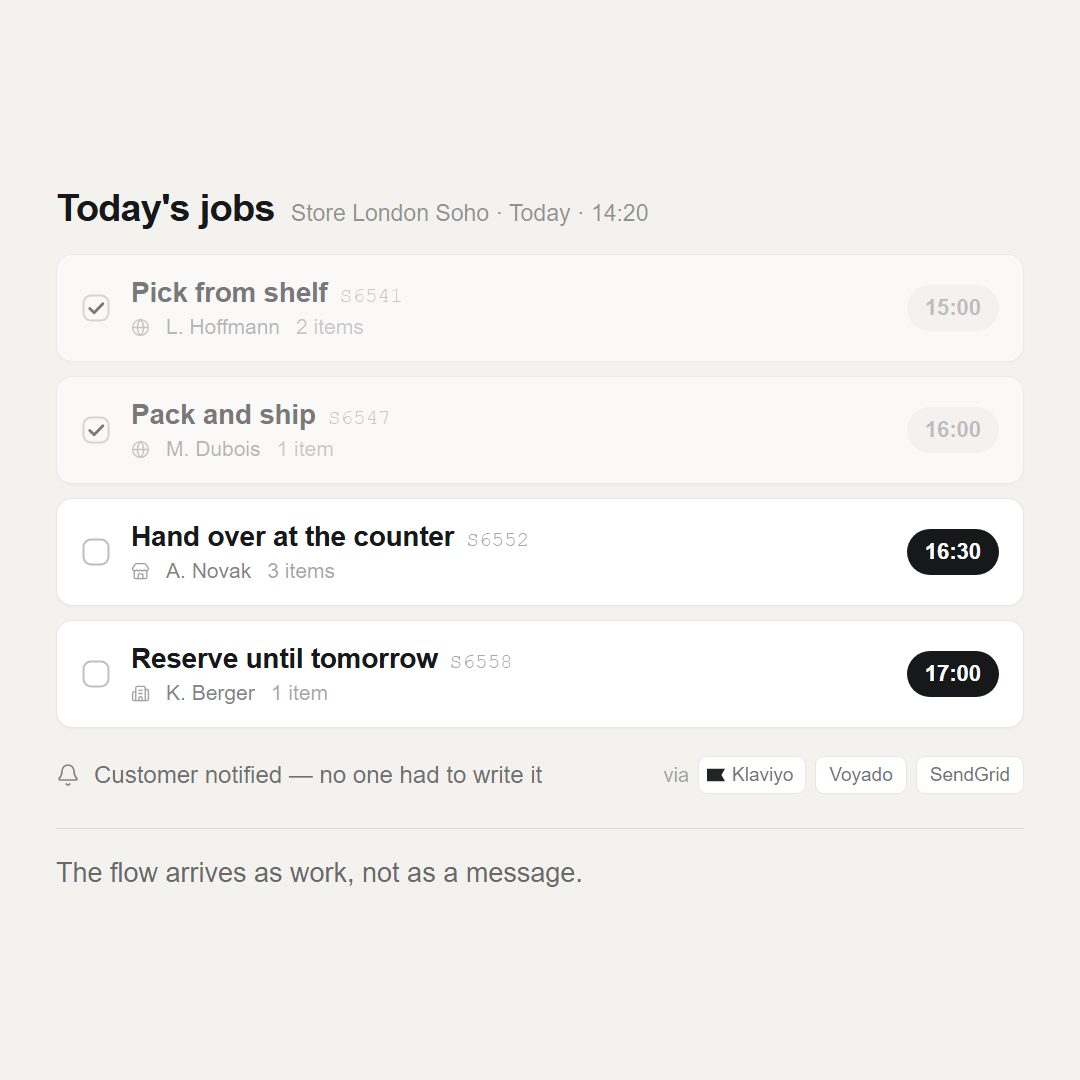
Picks, collections and reservations from web, till and phone in one list, sorted by when they are due.

Point of sale, e-commerce, inventory and customer service in one system. The agents work on the same data and with the same permissions as your staff.
The store and the webshop sell the same products, but often run on two systems that don't know about each other. In Avvyr there is one catalogue, one stock level and one customer, however many channels you run.
The same products, stock and orders as the web and the warehouse. Staff get tasks instead of emails, and find the item the way the customer describes it.
Picks, collections and reservations from web, till and phone in one list, sorted by when they are due.
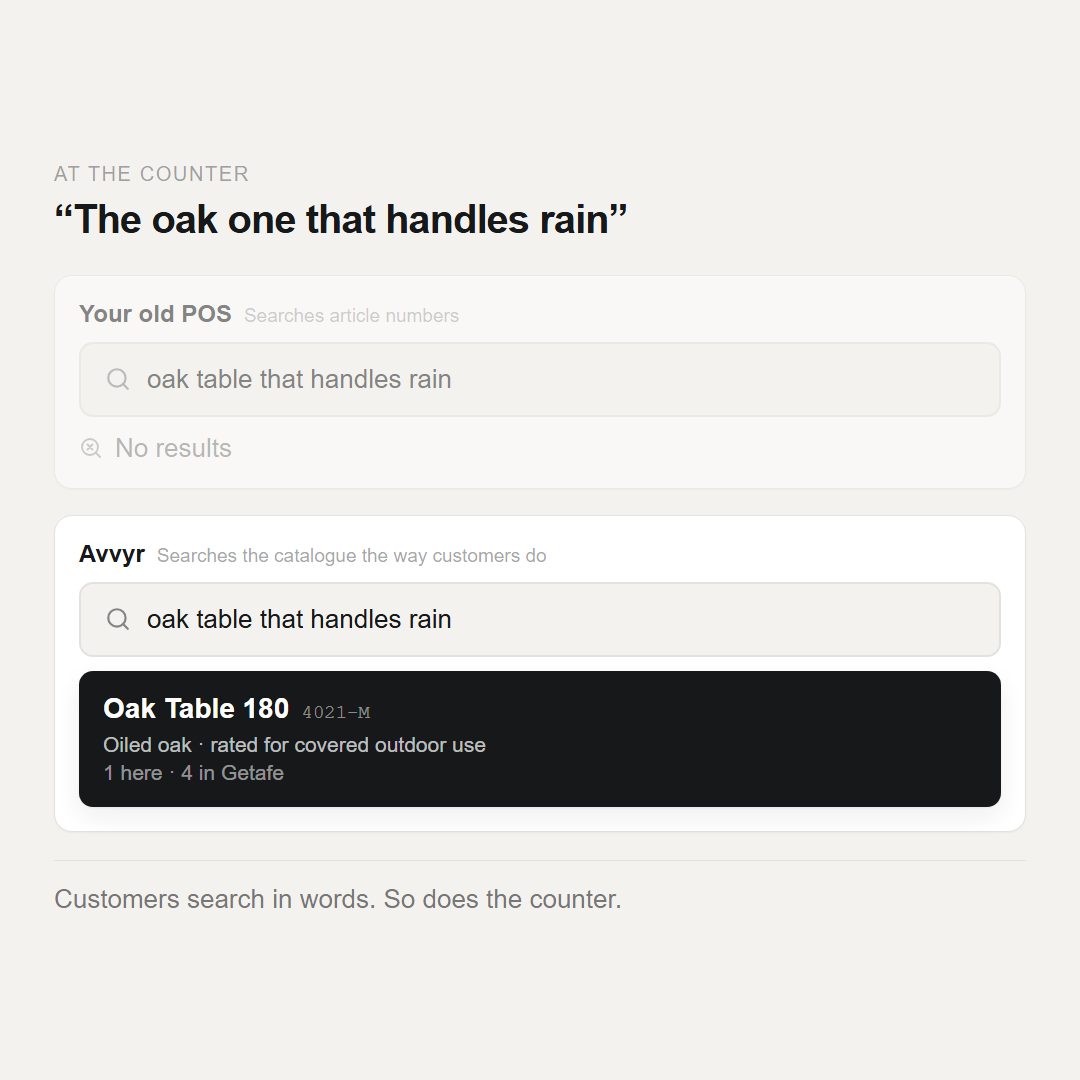
The till searches the same product content as the web. The customer describes the item in their own words, and staff find it.
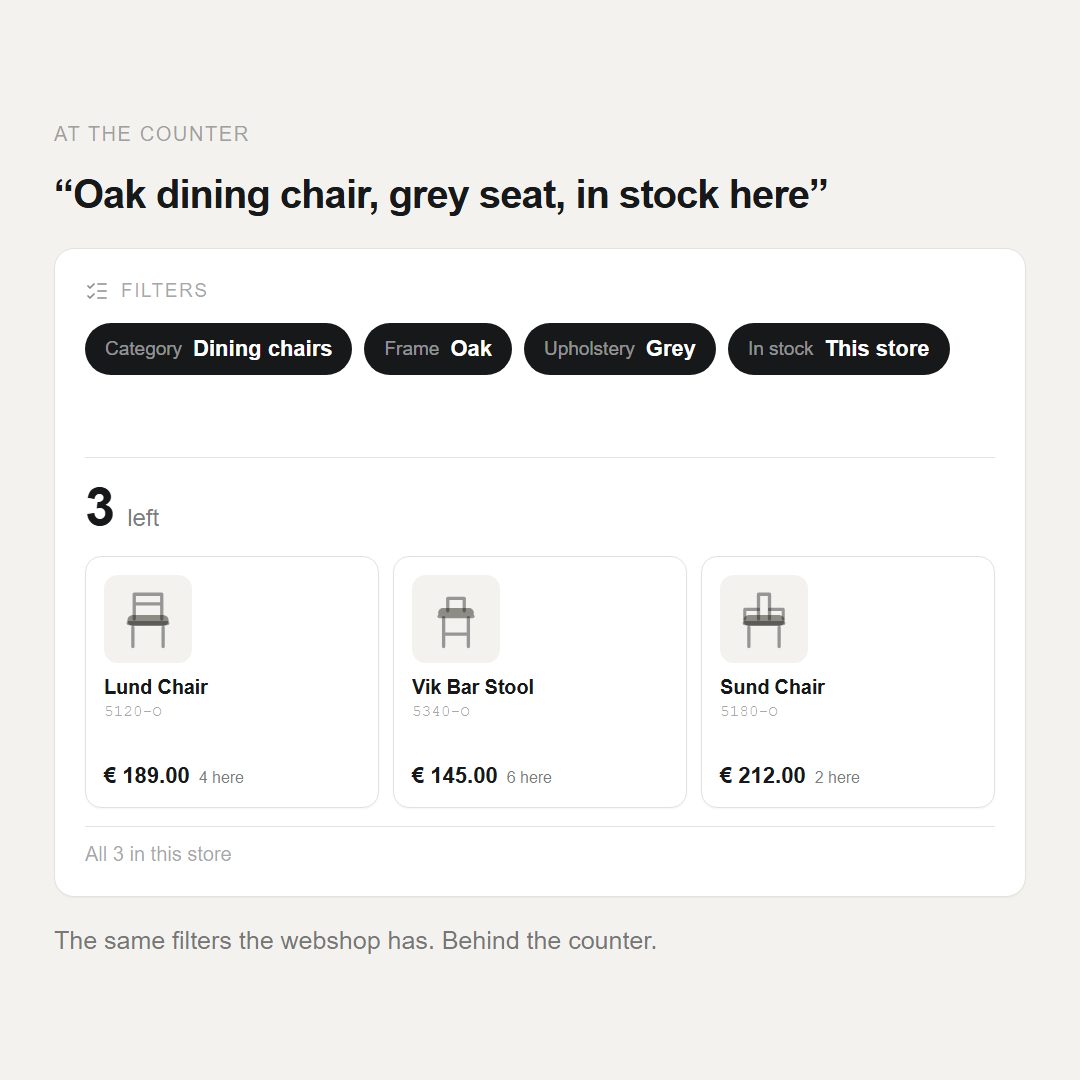
Filter on material, colour and size at the counter, with a product image on every hit. What e-commerce has had for twenty years, now at the till.
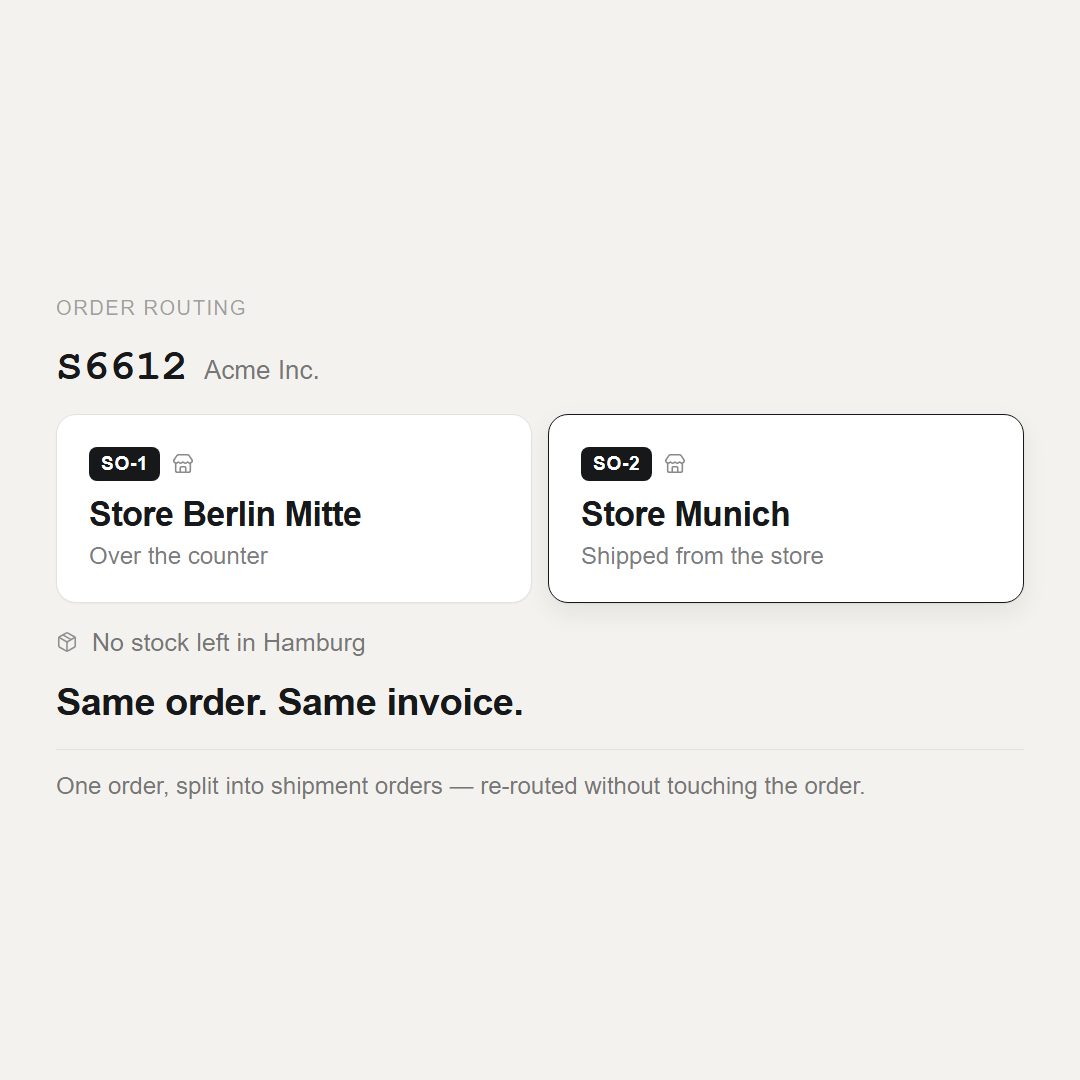
When an order cannot ship together it splits into shipment orders from different warehouses, and stays one order for the customer and at the till.
Point of sale, web, warehouse and customer service work on the same order and the same stock, so there is no integration in between to go wrong.
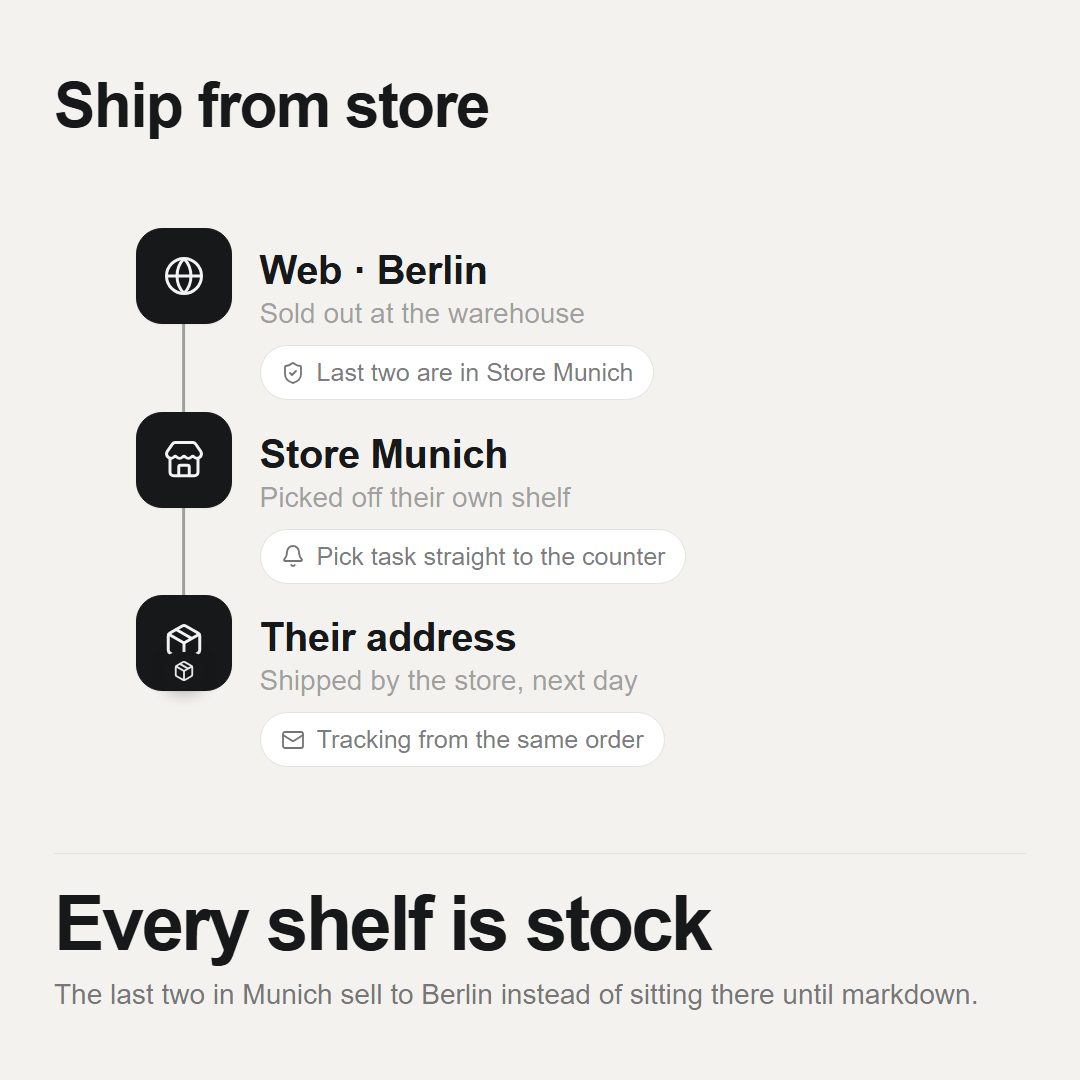
The warehouse is sold out, but the last two are in another store. The web order goes there as a pick task at the counter, the store packs and ships, and tracking comes from the same order. The item sells instead of waiting for the markdown.
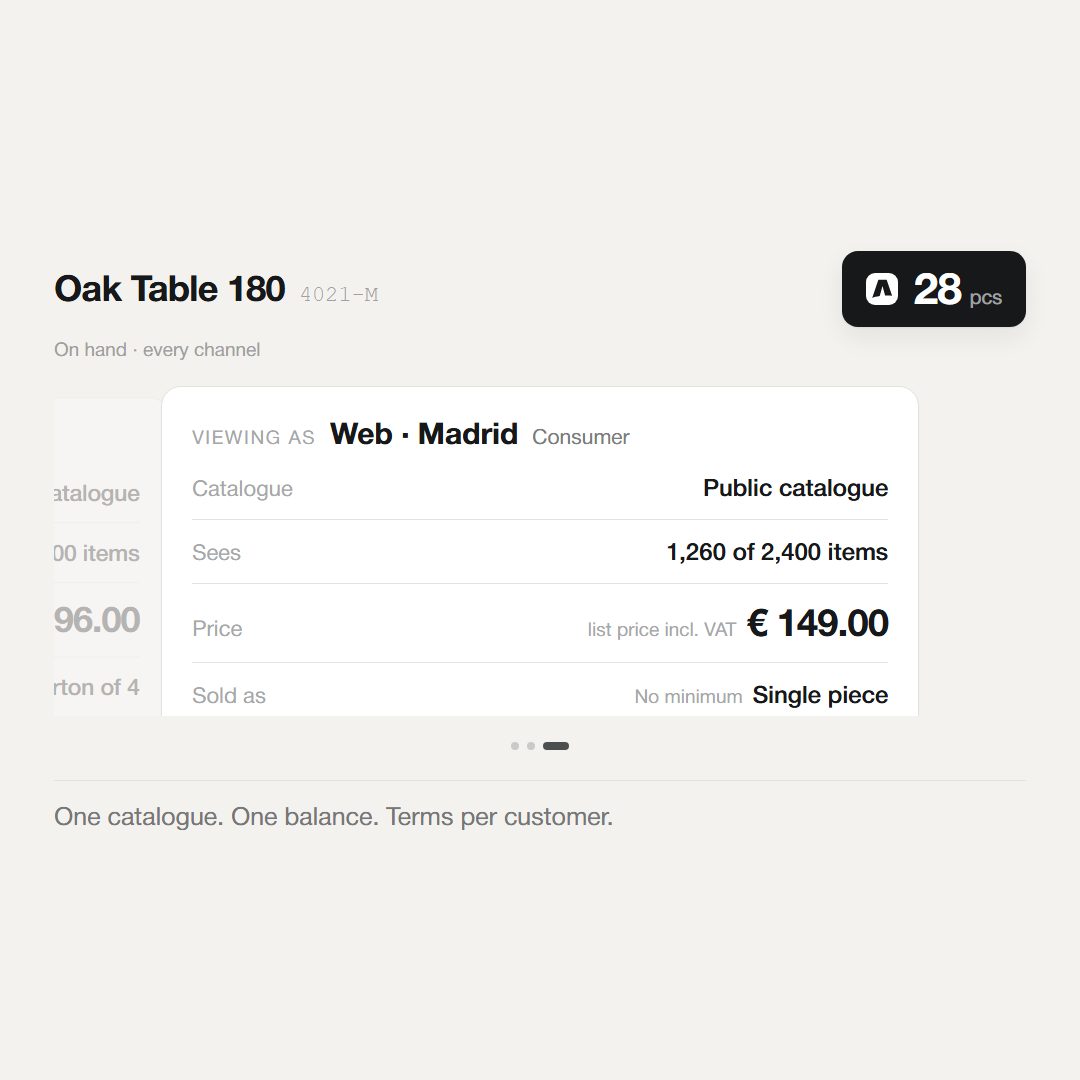
B2B is not a separate platform next to the store and the web. Business customers buy from the same catalogue, the same stock and the same orders as consumers. What differs is what that particular customer sees: assortment, price and who is allowed to order.
The same item shows a different assortment and price depending on who is logged in. The stock level is one and the same, so when a business customer places a large order the consumer site sees it at once.
They move your catalogue in, make the big changes and stop when something needs a decision. Every step is in the log with who did it.
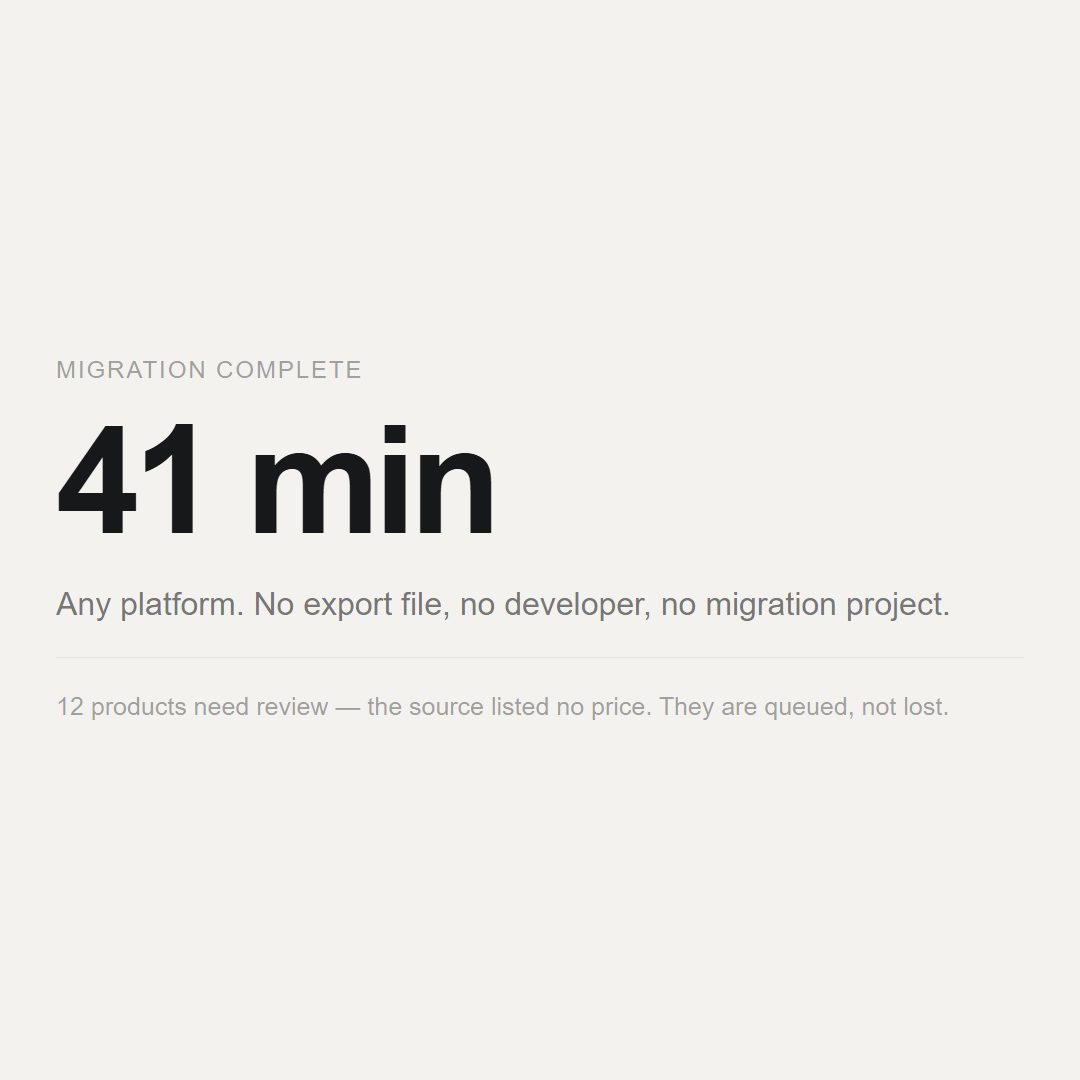
Give the agent the address of the site you run today. It reads the sitemap, fetches products, images and documents, and builds categories, attributes and catalogue. No export file and no migration project.
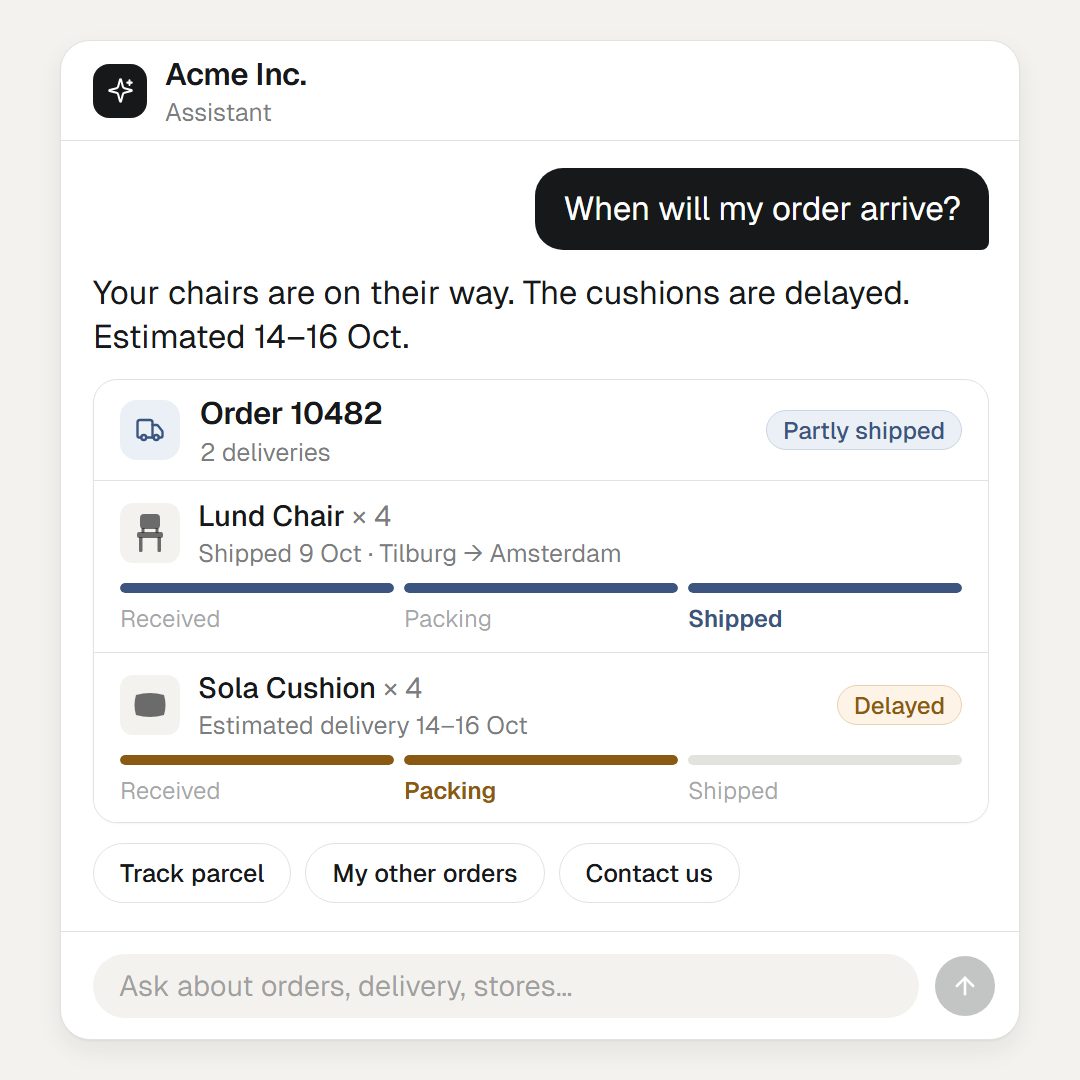
Avvyr Chat reads the same data as your staff: each shipment order on its own, delivery dates to the customer's postal code and which stores are open right now. It adds items to the customer's own cart and shows its answers as cards.
An order split into two deliveries gets two answers: what has shipped, what is being packed and when the rest is estimated to arrive. If something is late, the chat says so.

Store, web and everything in between in one system. One stock level, one customer and a till that knows what the web has sold.
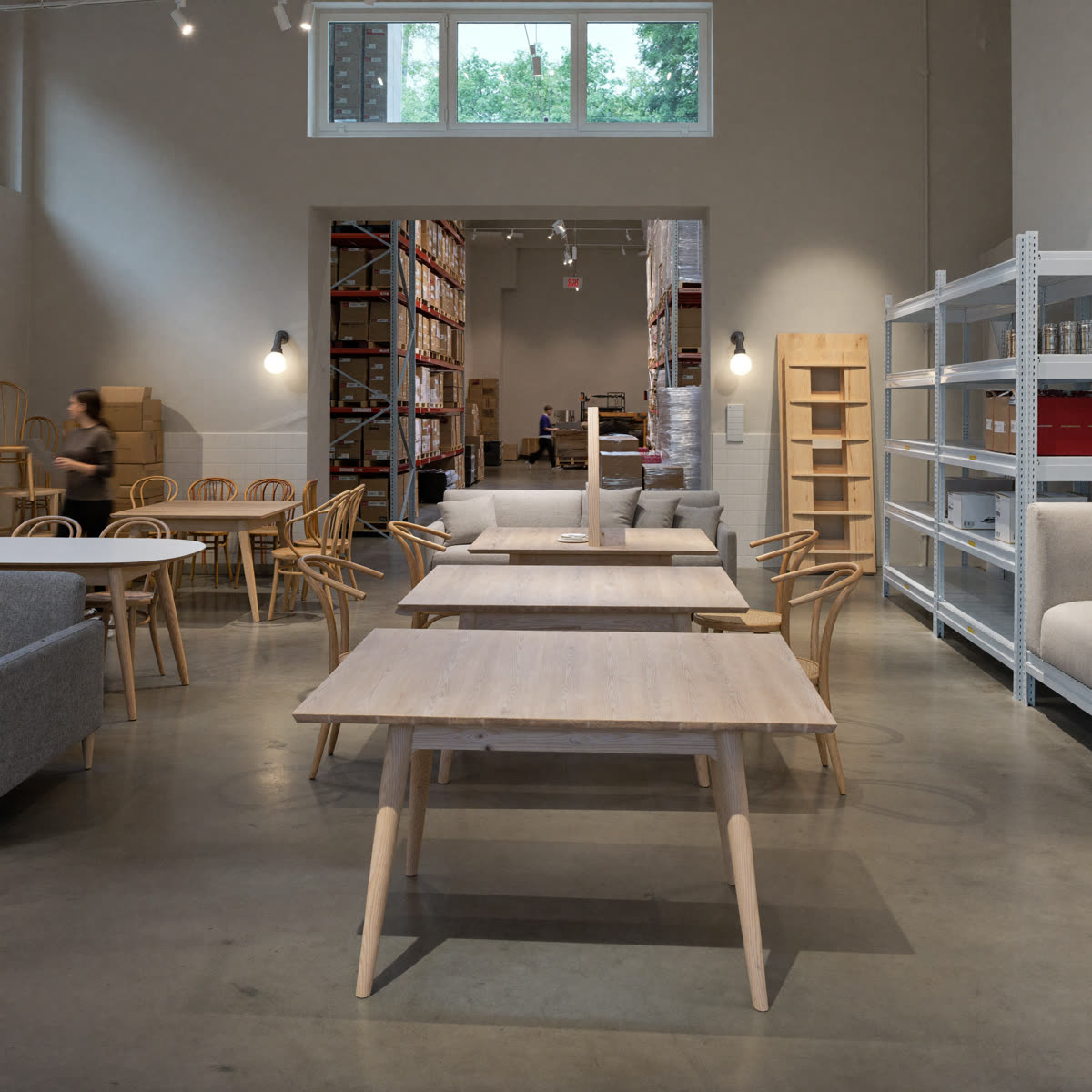
B2B ordering with price groups, volume pricing and trade agreements per customer. The same stock the store and the web sell from.

A till on a phone or iPad with Tap to Pay. Sales land in the same stock and the same books as the rest of the business.

Stock, staff and tills across several stores. Move goods between stores and see each store's sales as they happen.
ERP, e-commerce, shipping, marketing and customer service connect to the same core, not to each other. Data flows where it should without anyone having to change how they work.
Every connection goes through the same integration layer. The core stays clean, and when a provider is missing the connection is built against the same API as our own.
Sandbox
A ready-made store starts in a few seconds. No account, no card, no install.
The sandbox lives for one hour and is then deleted automatically. Email, payments and integrations are switched off.
Tell us about your business and we will walk through it with your own data.